
Submitted by Lynn Jax
I recently found an interesting article about using coffee grounds to boost plants. As a frequent Starbucks customer (green iced tea for me though, not coffee), I often see baskets of free coffee grounds in Starbucks but never took any home because I didn’t know which plants would benefit from adding them to the soil. I thought I would share what I found. Disclamer: I am not a Master Gardener and do not have a vast knowledge of plants etc. So take the advice with a measure of skepticism and check with a Master Gardener before you dump grounds on your favorite plants!
General Benefits
Benefits of Coffee Grounds as Fertilizer: Using coffee grounds can provide important nutrients, improve soil structure, and help keep pests away.
Nutrient Content: Coffee grounds are rich in nitrogen, which is a critical nutrient for plants. Nitrogen helps promote leaf growth and keeps plants healthy. They also contain other important minerals like potassium, phosphorus, magnesium, and copper, helping plants blossom and produce fruit. Additionally, coffee grounds can balance soil pH, making the environment more suitable for some plants.
Soil Structure Improvement: Adding coffee grounds to soil can improve its texture by helping to create good drainage, which prevents water from sitting around plant roots and causing rot. They also help soils retain moisture, ensuring plants get enough water even on hot days and can attract earthworms, which break down organic material and help aerate the soil.
Natural Pest Repellent: Coffee grounds can help keep pests away without harmful chemicals. Their smell deters slugs and snails, which often damage plants. They also contain compounds that can repel ants and other insects. By coffee grounds create a natural barrier that keeps plants safe from unwanted visitors, a simple and effective way to protect the garden.
Three Ways to Use Coffee Grounds
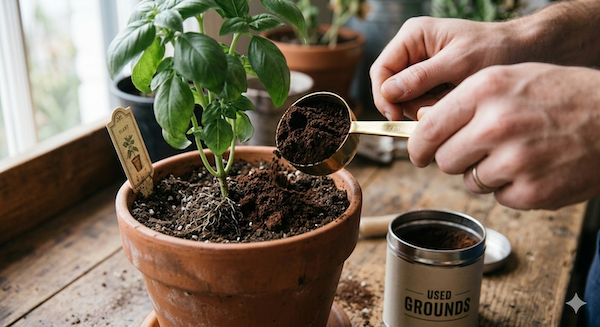
- Direct Application: Sprinkling coffee grounds directly onto the soil is simple and effective. Use them around acid-loving plants like roses, azaleas, and rhododendrons. Spread a thin layer—no more than half an inch thick—around the base of the plants. Be careful not to pile up the grounds too much. Thick layers can become compacted and might block water and air from reaching the plant roots. Mix the coffee grounds lightly into the top layer of soil. This helps to avoid clumping and promotes better absorption of nutrients.
- Composting with Coffee Grounds: Adding coffee grounds to compost bin enriches the compost with nitrogen. Coffee grounds work great when combined with other kitchen scraps like fruit peels and vegetable waste and balance well with “brown” materials like dried leaves or cardboard. Remember to keep a balanced ratio. Aim for about one part coffee grounds to three parts brown materials. This balance minimizes the risk of a smelly compost pile and accelerates the decomposition process. If you don’t compost already, starting one is easy. Just layer your kitchen scraps and garden waste in a bin, turning it occasionally to aerate.
- Making Coffee Ground Tea: Coffee ground tea is another way to nourish plants. Start by soaking about two cups of coffee grounds in a five-gallon bucket of water for a few days. Strain the liquid to remove any solid pieces. Use this nutrient-rich water to feed plants by pouring it at the base, like liquid fertilizer. Coffee ground tea can boost the growth of many plants, especially houseplants and garden vegetables. Pour the liquid directly on the soil, avoiding the foliage. It’s a gentle, effective way to provide nutrients without risking burn or over-fertilization.
List of Plants that Pair well with Coffee Grounds
- Azaleas – crave acidic soil. Sprinkle grounds around the base of azaleas for vibrant blooms and lush foliage.
- Hydrangeas – Want those dreamy blue hydrangea blooms? Coffee grounds add acidity to the soil, influencing the flower color towards beautiful shades of blue or purple.
- Blueberries – flourish in acidic soil. Coffee grounds lead to a bountiful blueberry harvest.
- Roses – Coffee grounds give a boost of nourishment to roses, improve the soil, and provide essential nutrients, promoting healthy growth and vibrant, fragrant blooms.
- Tomatoes – Coffee grounds act as a natural fertilizer for tomatoes, rich in nitrogen for strong, productive plants. Plus, the aroma may help deter some pests.
- Carrots – Not only do coffee grounds enhance the soil, but their slightly abrasive texture can deter pests that love to munch on carrots. Enjoy sweeter, healthier carrots.
- Radishes – are fast growers and benefit from the nutrient boost in coffee grounds. Expect a larger, crispier radish crop.
- Evergreen Trees & Spruces – prefer a touch of acidity in their soil. Add coffee grounds to their base for long-term health and vibrant green needles.
- Lilies – Certain lily varieties, like Asiatic and Oriental lilies, enjoy a slightly acidic environment. Mix coffee grounds into the soil for more beautiful, long-lasting blooms.
- Hibiscus – prefer slightly acidic soil. Use the grounds moderately by adding to compost or creating a diluted liquid fertilizer. Monitor the hibiscus’ response and the soil pH for the best results.
- Camellias – thrive by adding acidity and nutrients to the soil, when using coffee grounds, sprinkle them around the base of the plant. It’s essential to mix them into the soil gently, helping to improve drainage and keeps the soil rich.
- Peppers – The grounds add important nutrients like nitrogen, which helps peppers grow strong and healthy. Sprinkle coffee grounds around the base of the pepper plants, which improves the soil quality and keeps the plants happy. Using coffee grounds also helps keep away some pests that can bother the peppers. Just remember not to use too much, as it can make the soil too acidic.
- Potatoes – do well with nitrogen in the soil, which helps potato plants grow strong and leafy. Sprinkle the used grounds around the base of the potato plants. This also keeps pests away because some bugs don’t like the smell of coffee.
- Eggplants – thrive with added nitrogen, which is needed for healthy growth. Sprinkle coffee grounds around the base of the eggplants, helping to improve the soil’s texture. The grounds also attract earthworms, which are great for aerating the soil.
- Parsley – is a great herb to grow at home, adding fresh flavor to dishes. Coffee grounds help parsley plants thrive.
- Strawberries – grow strong with added nitrogen in the soil. The grounds help keep the soil moist as strawberries need a lot of water. Coffee grounds also help keep pests away because the smell seems to deter insects.
- Citrus Trees – The grounds help improve soil structure and provide essential nutrients, adding nitrogen to the soil, which is important for healthy tree growth and fruit production. Because citrus trees don’t like waterlogged roots, the coffee improves soil drainage.
- African Violets – are popular houseplants with beautiful flowers. Coffee grounds add extra acid to the soil and keep the plants healthy and vibrant. Sprinkle a small amount of used coffee grounds on the soil. Just be careful not to overdo it. Too much can harm them. Mixing the coffee grounds lightly into the soil works best. This way, the nutrients spread evenly.
- Snake Plants (AKA: Mother-in-Law’s Tongue] – are easy to care because they don’t need much attention. Coffee grounds add nitrogen to the soil which helps the leaves grow strong and green. Just remember to use coffee grounds in moderation. Too much can make the soil too acidic. Sprinkle a small amount on top of the soil or mix it in lightly.
- Christmas Cactus – Added nitrogen to the soil help the plant grow. Sprinkle used coffee grounds around the base of the cactus. Just be careful not to overdo it; too much can make the soil too acidic.
- Philodendrons – are popular houseplants known for their lush, green leaves and thrive in a variety of conditions. Coffee grounds can add nutrients and improve soil structure, which helps philodendrons grow strong. It’s important to use coffee grounds sparingly, though. Too much can make the soil too acidic. Mix the coffee grounds with compost or sprinkle a small amount directly onto the soil. This way, the plants get a nice, balanced boost.